If you’re looking to add a splash of color to your birdwatching, 20 types of red birds offer some of the most eye-catching sights in North America.
From brilliant backyard visitors to elusive forest species, these birds bring flashes of crimson, scarlet, and fiery orange into a wide range of habitats.
Some stand out with bold, full-body color, while others reveal their red tones in subtle but beautiful ways.
Together, they create a vivid and memorable part of the natural world that’s hard to overlook once you know what to watch for.
Northern Cardinal
Cardinalis cardinalis
Alpha code: NOCA
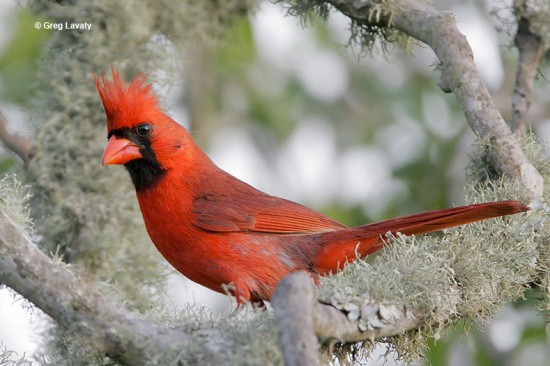
The Northern Cardinal is one of the most recognizable birds in North America, especially because of the male’s brilliant red plumage and black mask around the face. Females are more subdued, with warm brown tones and hints of red on the wings and crest.
These birds are year-round residents across much of the eastern and central United States, as well as parts of Mexico. They prefer gardens, woodland edges, and shrubby habitats, which is why they are frequent visitors to backyard feeders. Their clear, whistling songs are easy to identify and often heard at dawn and dusk. Cardinals primarily feed on seeds, fruits, and insects.
Unlike many songbirds, they do not migrate, making them a constant presence through all seasons, even brightening snowy winter landscapes with their vivid color.
Related: Do birds fly at night?
Scarlet Tanager
(Piranga olivacea)
Alpha code: SCTA
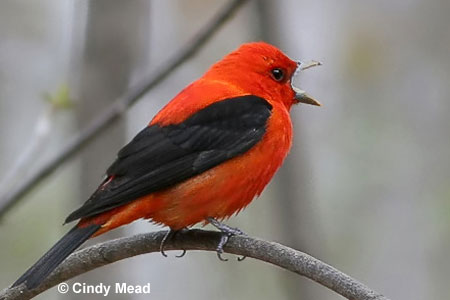
The Scarlet Tanager is a striking bird, with males displaying intense scarlet bodies contrasted by jet-black wings and tails during the breeding season. Females and non-breeding males are olive-yellow, offering excellent camouflage among leaves.
These birds breed in mature deciduous forests across eastern North America and migrate to South America for the winter. Despite their vivid color, they can be surprisingly difficult to spot because they spend most of their time high in the forest canopy.
Their song is somewhat similar to a robin’s but rougher in tone. Scarlet Tanagers mainly eat insects, which they catch among leaves and branches, but they also consume fruit during migration. Their presence is often revealed more by sound than sight, making them a rewarding find for patient birdwatchers.
Summer Tanager
(Piranga rubra)
Alpha code: SUTA
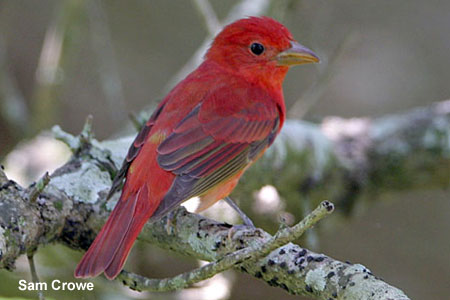
The Summer Tanager is the only completely red bird in North America, at least when it comes to adult males. Their plumage is a uniform rosy-red, lacking the contrasting black wings seen in Scarlet Tanagers.
Females are mustard-yellow to olive. These birds prefer open woodlands, especially in the southern United States, and are often found near oak trees. Summer Tanagers are known for their unique feeding habit—they specialize in catching bees and wasps, skillfully removing the stinger before eating them. Their song is melodic and robin-like but slightly softer.
They migrate to Central and South America during the winter months. Though not as flashy in contrast as some other species, their pure red coloration and calm, deliberate behavior make them a favorite among bird enthusiasts.
Vermilion Flycatcher
(Pyrocephalus obscurus)
Alpha code: VEFL
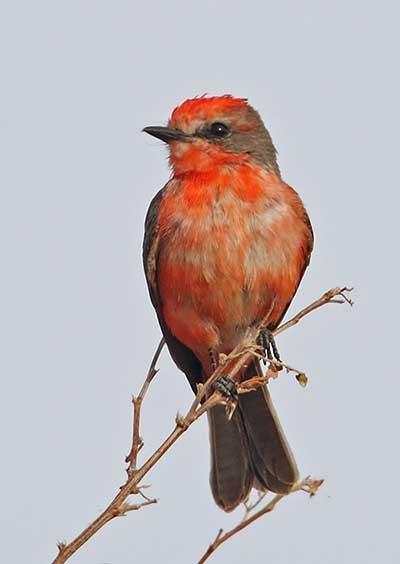
The Vermilion Flycatcher is a small but incredibly vibrant bird, with males glowing in bright red plumage set against dark brown wings and a mask. Females are much more muted, with grayish tones and faint pinkish washes underneath.
These birds are found in the southwestern United States, especially in open areas near water such as deserts, grasslands, and river edges. They are active hunters, often seen perched low before darting out to catch insects in mid-air. Their behavior is energetic and eye-catching, especially during courtship displays when males perform fluttering flights.
Despite their small size, their color makes them stand out dramatically against dry landscapes. Their soft, musical calls add to their charm, making them one of the most visually stunning flycatchers in North America.
House Finch
(Haemorhous mexicanus)
Alpha code: HOFI
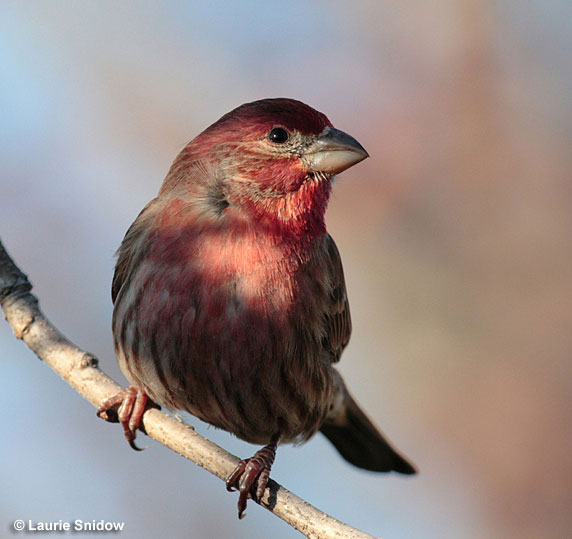
The House Finch is a familiar and adaptable bird commonly seen in cities, suburbs, and rural areas alike. Males have a rosy red coloration on the head, throat, and chest, while females are streaked brown with no red.
Originally native to the western United States, they were introduced to the east and have since spread widely. These birds are highly social and often gather in small flocks, especially around feeders. They feed primarily on seeds, fruits, and buds, making them easy to attract with sunflower seeds.
Their song is a cheerful, warbling series of notes that varies from bird to bird. House Finches are non-migratory in many areas and can breed multiple times a year. Their ability to thrive in human-altered environments has made them one of the most widespread birds on the continent.
Purple Finch
(Haemorhous purpureus)
Alpha code: PUFI
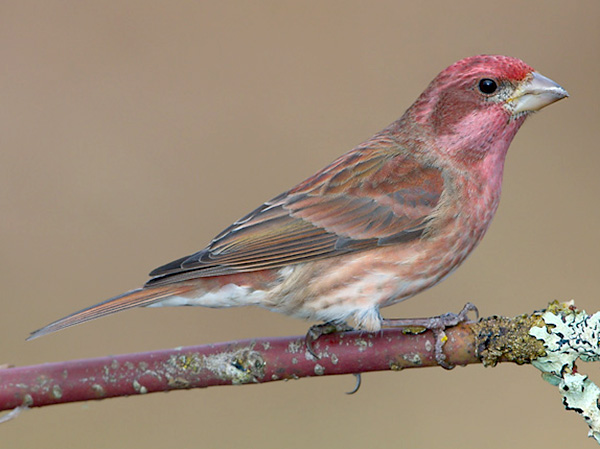
The Purple Finch is often described as looking like it has been dipped in raspberry juice. Males have a rich reddish-pink coloration that covers much of their body, blending with brown streaks. Females are brown and heavily streaked, lacking any red.
These birds are found in coniferous and mixed forests across Canada and the northern United States, though they may move southward in winter. Their song is a rich, melodious warble, often delivered from treetops. Purple Finches primarily eat seeds, berries, and buds, but they also consume insects during the breeding season.
They can sometimes be confused with House Finches, but they are generally chunkier and more richly colored. Their gentle song and subtle beauty make them a rewarding species for careful observers.
Cassin’s Finch
(Haemorhous cassinii)
Alpha code: CAFI
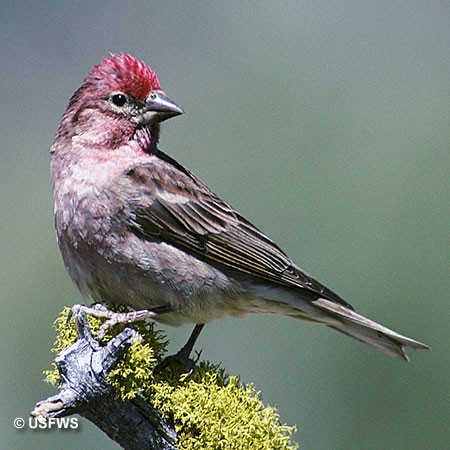
Cassin’s Finch is a western counterpart to the Purple Finch, found mainly in mountainous regions and conifer forests. Males have a pinkish-red crown and face, with a more subdued coloration across the rest of the body. Females are streaked brown and resemble other finch species, requiring close observation for identification.
These birds often move in flocks outside the breeding season and can be seen feeding on seeds from trees like pines and firs. Their song is pleasant and varied, often including mimicry of other bird calls. Cassin’s Finches are somewhat nomadic, with movements influenced by food availability.
Though not as vividly red as some species, their subtle tones and high-altitude habitats give them a unique appeal.
Red Crossbill
(Loxia curvirostra)
Alpha code: RECR
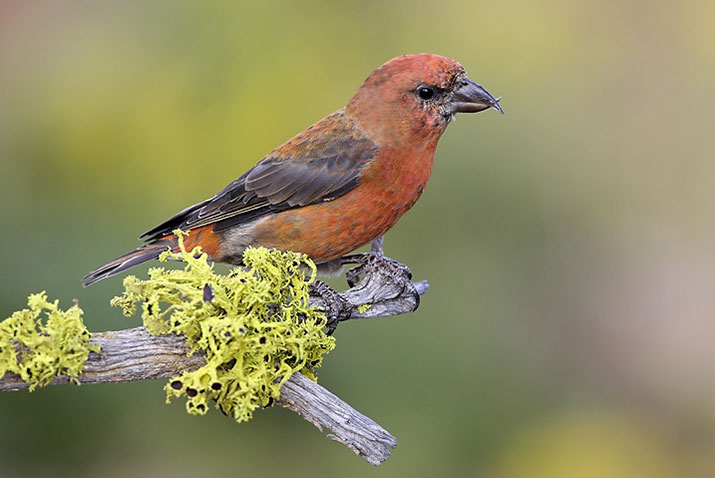
The Red Crossbill is a specialized finch with a unique crossed bill that allows it to extract seeds from pine cones. Males are typically brick red, while females are yellowish or olive. These birds are highly adapted to conifer forests and are often found wherever cone crops are abundant.
Their movements are unpredictable, as they wander widely in search of food. Red Crossbills have a distinctive “jip-jip” call that varies among different populations, some of which are considered separate types. Their feeding behavior is fascinating to watch, as they skillfully pry open cones with their unusual bills.
They can breed at almost any time of year if food is plentiful, making them quite different from most songbirds.
White-winged Crossbill
(Loxia leucoptera)
Alpha code: WWCR
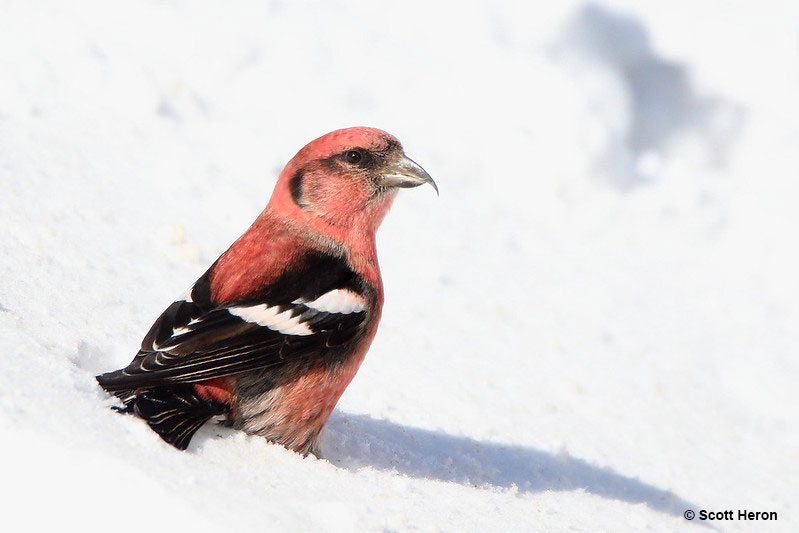
The White-winged Crossbill is similar to the Red Crossbill but can be easily identified by the bold white wing bars that contrast with its red body. Males are rosy red, while females are yellowish-green. These birds inhabit boreal forests across northern North America and are closely tied to spruce and fir trees.
Like other crossbills, they use their specialized bills to extract seeds from cones. Their calls are higher-pitched and more musical than those of Red Crossbills. White-winged Crossbills are also nomadic, moving in response to cone availability.
During irruption years, they may appear far south of their usual range. Their striking combination of red plumage and crisp wing markings makes them a favorite among birdwatchers.
Pine Grosbeak
(Pinicola enucleator)
Alpha code: PIGR
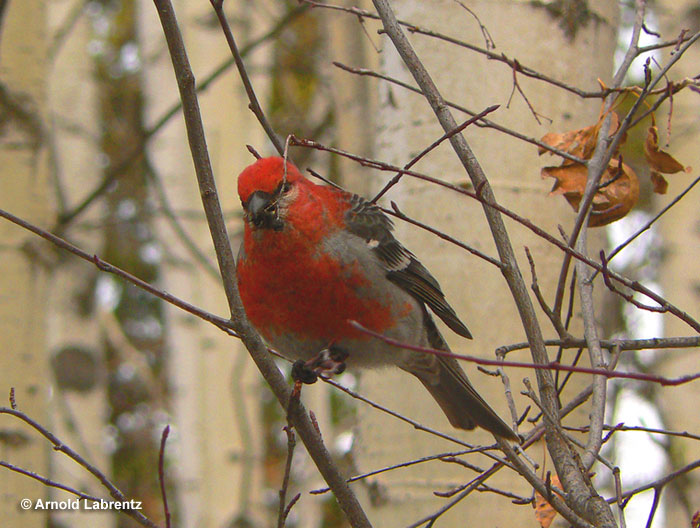
The Pine Grosbeak is a large, gentle finch of northern forests. Males display soft rosy-red plumage, especially on the head and chest, while females are gray with yellowish highlights. These birds inhabit boreal and mountainous regions, often staying high in conifer trees.
Despite their size, they are surprisingly quiet and slow-moving, giving them a calm, almost tame presence. Pine Grosbeaks feed on buds, seeds, and fruits, particularly mountain ash berries.
Their song is a soft, flute-like whistle that blends into the forest atmosphere. In winter, they may move southward in search of food, occasionally appearing in unusual locations. Their subtle beauty and peaceful demeanor make them a memorable sight for those exploring northern habitats.
Hepatic Tanager
(Piranga flava)
Alpha code: HETA
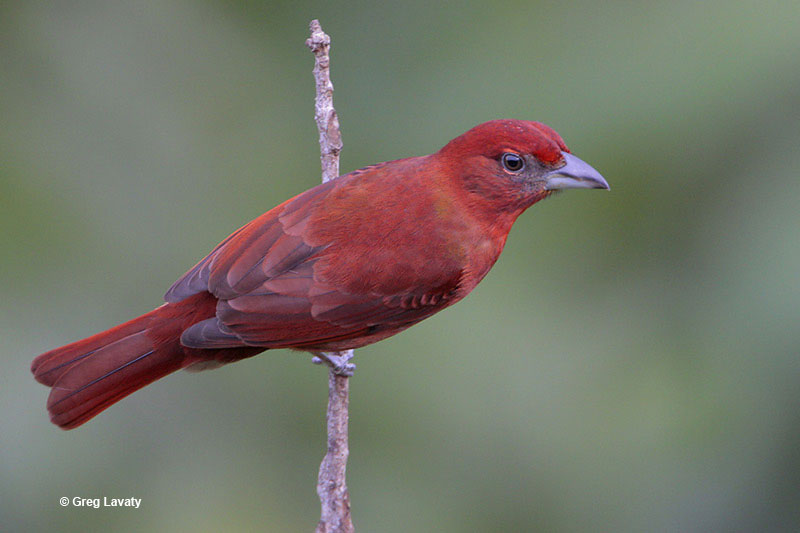
The Hepatic Tanager has a more earthy kind of red compared to brighter species, showing a deep rusty or brick-red coloration in males. Females are yellowish with gray tones, blending well into dry woodland environments.
These birds are mainly found in the southwestern United States, particularly in pine and oak forests at higher elevations. Their name “hepatic” refers to a liver-like color, which describes their muted red shade. They are often quiet and somewhat elusive, spending time in the canopy where they forage for insects and berries.
Their song is a series of short, robin-like phrases, though less musical. Because of their subtle coloration and preference for remote habitats, they are less commonly seen but are a rewarding find for birdwatchers exploring mountainous regions.
Painted Redstart
(Myioborus pictus)
Alpha code: PARE
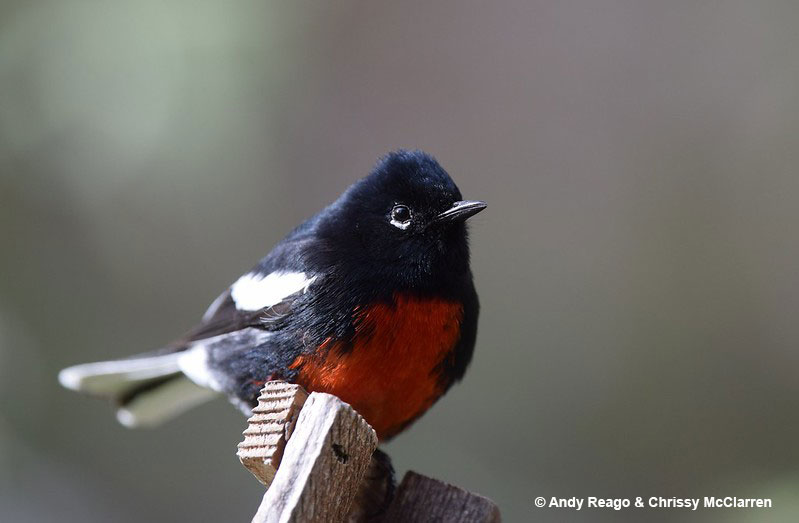
The Painted Redstart is a striking bird with bold black plumage contrasted by bright red underparts and a white wing patch. While not entirely red, its vivid coloration makes it stand out dramatically.
Found in the southwestern United States, especially in Arizona and New Mexico, it prefers shady canyons and wooded streams. This species is very active and often fans its tail and wings to flush out insects, which it then quickly captures. Unlike many small birds, it is quite fearless and may come close to humans.
Its call is sharp and distinctive, while its song is a series of high-pitched notes. The combination of contrasting colors and energetic behavior makes the Painted Redstart one of the most visually exciting birds in its range.
Red-faced Warbler
(Cardellina rubrifrons)
Alpha code: RFWA
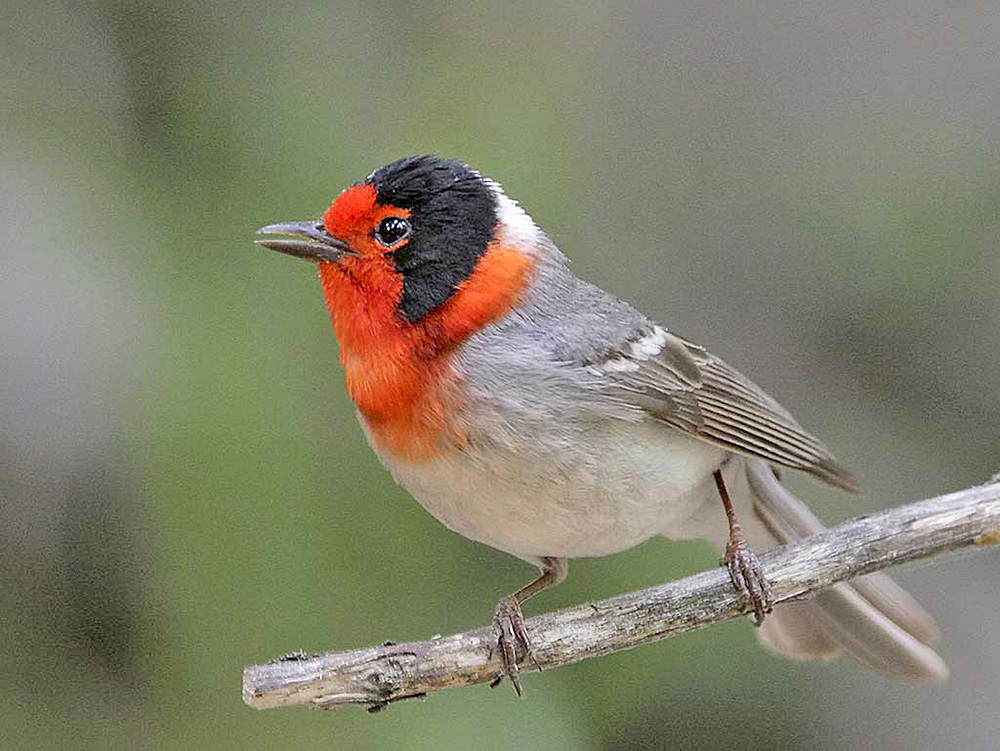
The Red-faced Warbler is a small but brilliant bird, easily recognized by its bright red face, black cap, and gray body. It inhabits high-elevation forests in the southwestern United States, particularly in mountainous regions with pine and fir trees.
These birds are active and agile, constantly moving through branches in search of insects. Their song is a lively series of musical trills that echo through forested slopes. Despite their bright facial coloration, they can be surprisingly hard to spot due to their fast movements and preference for dense foliage.
During migration, they travel south into Mexico. For birdwatchers, catching a glimpse of this species is a memorable experience, especially because of its vivid red mask set against a cool gray body.
Common Redpoll
(Acanthis flammea)
Alpha code: CORE
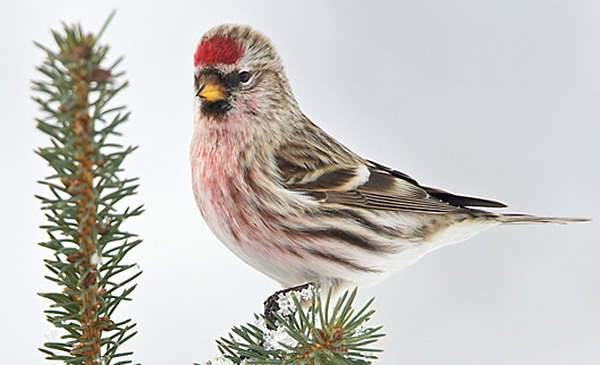
The Common Redpoll is a small finch best known for the tiny red patch on its forehead and a soft pinkish wash on the chest in males. Its body is mostly brown and white with streaks, helping it blend into snowy or shrubby environments.
These birds are found in northern regions but often move southward in winter, sometimes appearing in large flocks. They feed primarily on seeds, especially from birch and alder trees, and are frequent visitors to feeders during colder months.
Their behavior is lively and social, with constant movement and chatter. Redpolls are well adapted to cold climates, even having the ability to tunnel into snow for warmth. Their subtle red markings add a delicate touch of color to winter landscapes.
Hoary Redpoll
(Acanthis hornemanni)
Alpha code: HORE
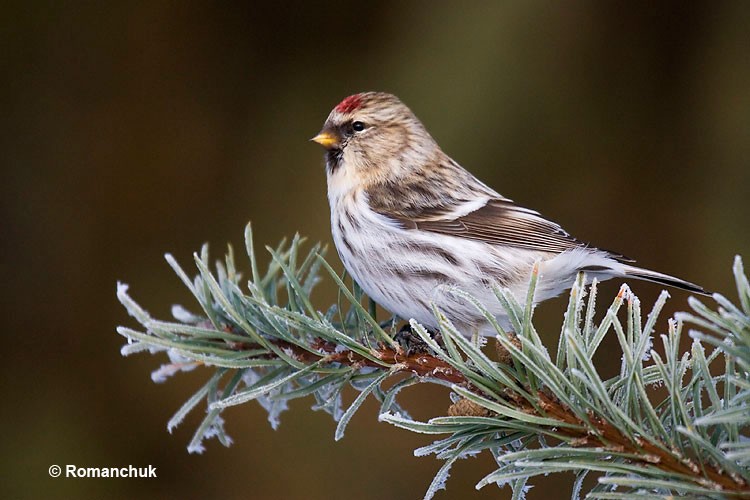
The Hoary Redpoll is similar to the Common Redpoll but paler and frostier in appearance, with a smaller bill and less streaking. It also has the characteristic red cap, though its overall look is much lighter, almost silvery in some conditions.
This species breeds in the Arctic and is less commonly seen further south, though it occasionally appears during winter irruptions. Hoary Redpolls feed on seeds and often mix with flocks of Common Redpolls, making identification a challenge. Their soft calls and constant movement make them lively additions to northern birdlife.
Spotting one requires careful attention to detail, especially when distinguishing it from its more common relative. Their pale beauty reflects the cold environments they inhabit.
Red-breasted Sapsucker
(Sphyrapicus ruber)
Alpha code: RBSA
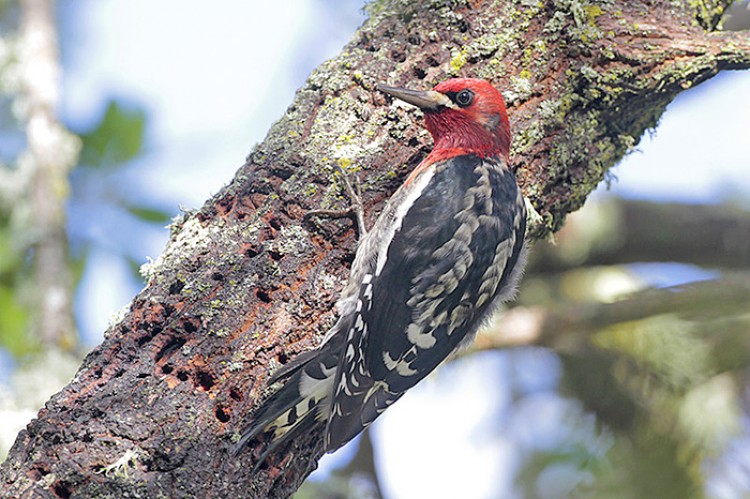
The Red-breasted Sapsucker is a medium-sized woodpecker with a bold red head and chest, contrasting with black and white markings on the body. Found along the western coast of North America, it inhabits forests ranging from sea level to mountainous areas.
These birds are known for drilling neat rows of holes in tree bark to feed on sap, which also attracts insects that they eat. Their tapping can be rhythmic and distinctive. They are less conspicuous than some woodpeckers but can be identified by their calls and feeding patterns.
Red-breasted Sapsuckers play an important ecological role, as other species often use their sap wells. Their strong red coloration makes them stand out against the greens and browns of forest habitats.
Red-headed Woodpecker
(Melanerpes erythrocephalus)
Alpha code: RHWO
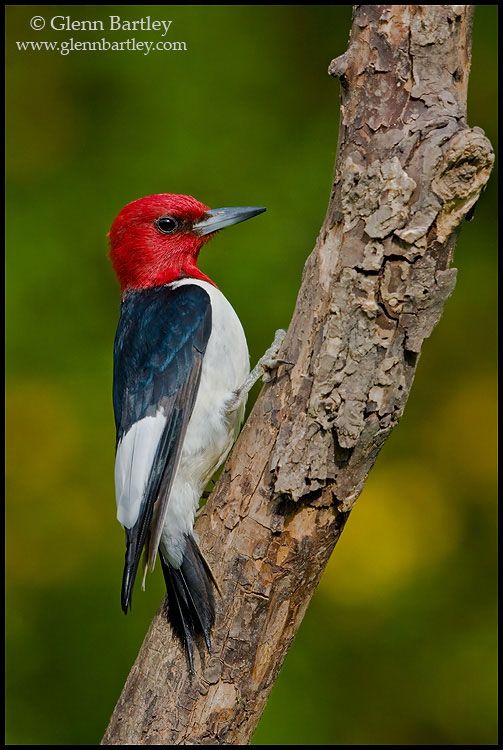
The Red-headed Woodpecker is one of the most striking woodpeckers in North America, with a completely crimson head, bright white body, and black wings. This bold color pattern makes it easy to identify even from a distance. It prefers open woodlands, savannas, and areas with scattered trees.
Unlike many woodpeckers, it often catches insects in mid-air and may store food for later use. Its behavior is confident and sometimes aggressive when defending territory. The population of this species has declined in some areas due to habitat loss, making sightings more special.
Their sharp calls and distinctive appearance make them a favorite among birdwatchers. When seen in sunlight, their red head appears especially vivid and eye-catching.
Acorn Woodpecker
(Melanerpes formicivorus)
Alpha code: ACWO
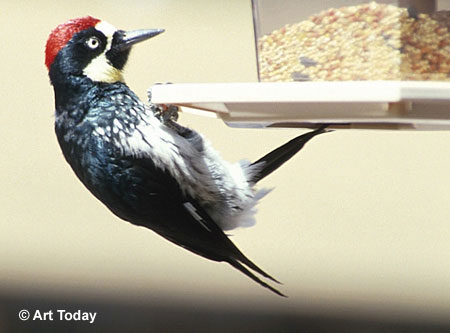
The Acorn Woodpecker is a social and highly distinctive bird with a red crown, white face, and black body. It is best known for its habit of storing acorns in specially created “granary trees,” where it drills holes to keep food for later use.
These birds live in family groups and cooperate in raising young, which is unusual among woodpeckers. Found in the western United States, they prefer oak woodlands where acorns are abundant.
Their calls are loud and somewhat comical, adding to their lively personality. Watching a group of Acorn Woodpeckers interact is both entertaining and fascinating. Their red cap adds a splash of color, though it is just one part of their unique and memorable appearance.
Anna’s Hummingbird
(Calypte anna)
Alpha code: ANHU
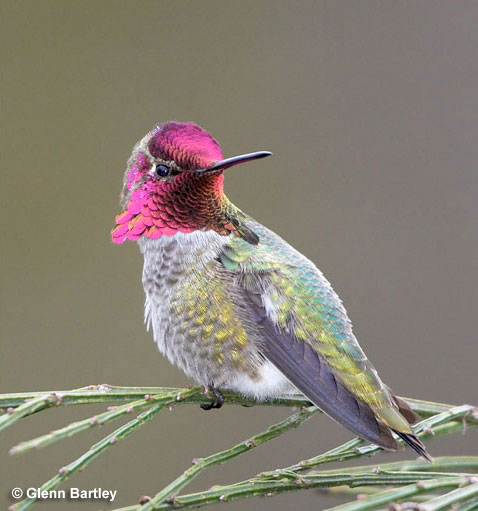
Anna’s Hummingbird is a small but dazzling bird, especially the male, which displays an iridescent red-pink head and throat that can appear to glow in the right light. Females are more subdued but still elegant.
These birds are found along the western coast of North America and have adapted well to urban environments, often visiting garden feeders. Unlike many hummingbirds, Anna’s Hummingbird does not migrate long distances and can be seen year-round in some regions. Their flight is agile and precise, allowing them to hover while feeding on nectar from flowers.
Males perform impressive courtship dives, creating a sharp sound with their feathers. Their shimmering coloration changes depending on the angle of light, making them especially captivating to observe.
Rufous Hummingbird
(Selasphorus rufus)
Alpha code: RUHU
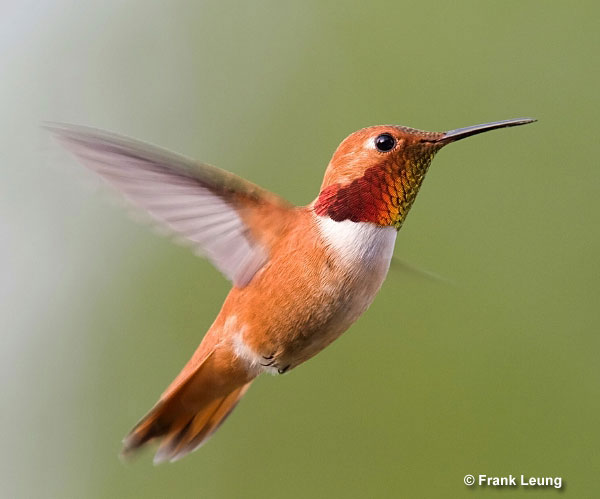
The Rufous Hummingbird is known for its fiery orange-red plumage, especially in males, which can appear almost coppery in sunlight. Females have green backs with some orange coloring. This species undertakes one of the longest migrations of any hummingbird, traveling from Alaska to Mexico each year.
Despite its tiny size, it is highly territorial and often aggressive, defending feeding areas from other birds. Rufous Hummingbirds prefer open habitats, gardens, and forest edges where flowers are plentiful. Their rapid wingbeats and sharp calls make them energetic and noticeable.
Watching one dart through the air is a vivid reminder of how much energy such a small bird can possess. Their bold color and personality make them unforgettable.
Bottom line
We hope you got something new from here and discovered just how fascinating these 20 types of red birds can be. Some are bold and easy to spot, while others reward a bit of patience and curiosity.
Once you start noticing them, even familiar places begin to feel more alive. Keep your eyes open—you never know when a flash of red will catch your attention next.