Green birds are all around us, although you may not always notice them. You might have seen a green parakeet in a city park or spotted a small olive-green bird hiding among the leaves.
Some are easy to recognize. Others blend into trees so well that you may hear them long before you see them.
And green doesn’t always mean the same thing. One bird can be bright lime green while another is dark olive or emerald green. Some even seem to change color as the light hits their feathers.
Here are 25 green birds from around the world, including several you may have already seen without realizing it.
1. Green Jay
Scientific name: Cyanocorax yncas
Length: 9.8–11.4 in (25–29 cm)
Wingspan: About 15 in (38 cm)
Weight: 2.3–3.9 oz (66–110 g)
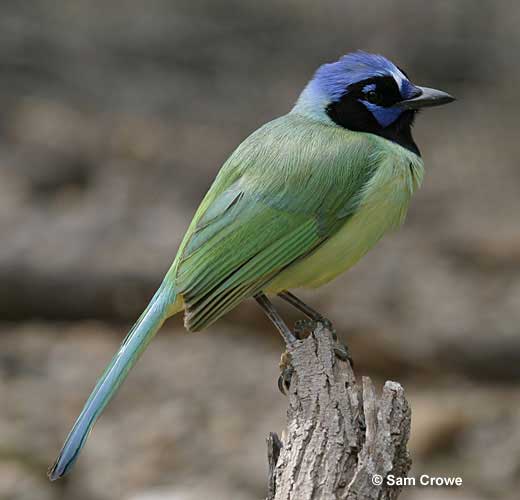
If you think all jays are blue, the Green Jay may change your mind. Its back and wings are bright green while its head mixes blue and black with a bold dark face.
In the United States, you’ll need to travel to southern Texas to see one. Their range continues through Mexico and Central America with separate populations in South America.
Green Jays often move around in noisy family groups. Look for them in woodland, scrub and thick vegetation where they search for insects, fruit, seeds and small animals.
They’re clever birds too. Green Jays have been observed using sticks to reach food that would otherwise be difficult to get.
2. Green Parakeet
Scientific name: Psittacara holochlorus
Length: 11–13 in (28–33 cm)
Wingspan: About 19–21 in (48–53 cm)
Weight: 6.3–8.2 oz (180–230 g)
Imagine looking up from a busy city street and seeing dozens of bright green parrots flying overhead. In parts of southern Texas, that’s exactly what you might see.
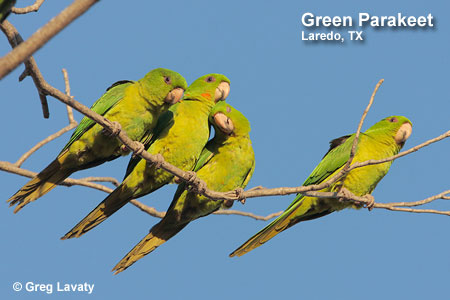
The Green Parakeet is green almost from head to tail. Its long pointed tail helps separate it from many other green birds and a few red feathers may occasionally show around the head or wings.
Its natural range stretches from southern Texas through Mexico and into Central America. These parakeets have adapted particularly well to towns and cities.
You may hear them before you see them. Flocks can be extremely noisy, especially when hundreds of birds gather at communal roosts.
Their menu includes fruit, seeds, berries and flowers.
3. Rose-ringed Parakeet
Scientific name: Psittacula krameri
Length: 15–17 in (38–43 cm)
Wingspan: About 17–19 in (43–48 cm)
Weight: 3.4–4.9 oz (95–140 g)
You don’t have to visit the tropics to see wild green parrots. Walk through the right park in London and a Rose-ringed Parakeet may fly right over your head.
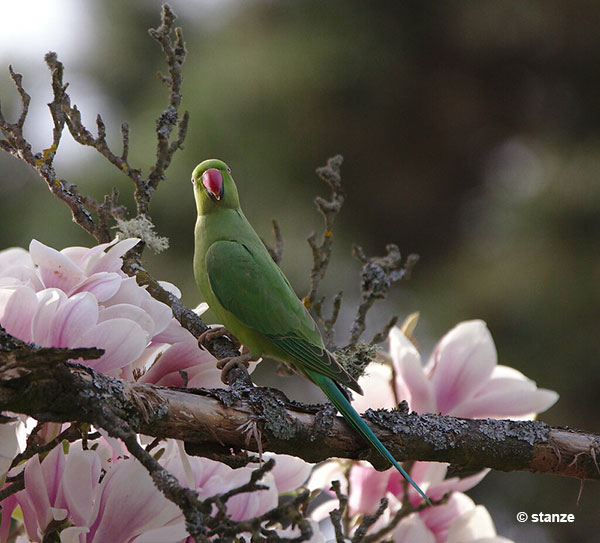
These slender parrots are bright green with long pointed tails and red bills. Adult males have a narrow black and pinkish-red ring around the neck. Females lack the complete ring but are just as green.
Rose-ringed Parakeets are native to Africa and South Asia. Introduced populations have become established in many other places, especially around European cities.
Parks, gardens, farmland and city streets with mature trees can all provide suitable habitat.
They eat seeds, fruit, nuts, flowers and buds and often gather in large, noisy groups.
4. Monk Parakeet
Scientific name: Myiopsitta monachus
Length: 11–12 in (28–30 cm)
Wingspan: 19–21 in (48–53 cm)
Weight: 3.2–4.2 oz (90–120 g)
Most parrots look for a hole in a tree when they need somewhere to nest. Monk Parakeets take a completely different approach: they build their own homes from sticks.
And they don’t always stop at a single nest. Several pairs can build separate chambers inside one huge structure which may grow larger year after year.
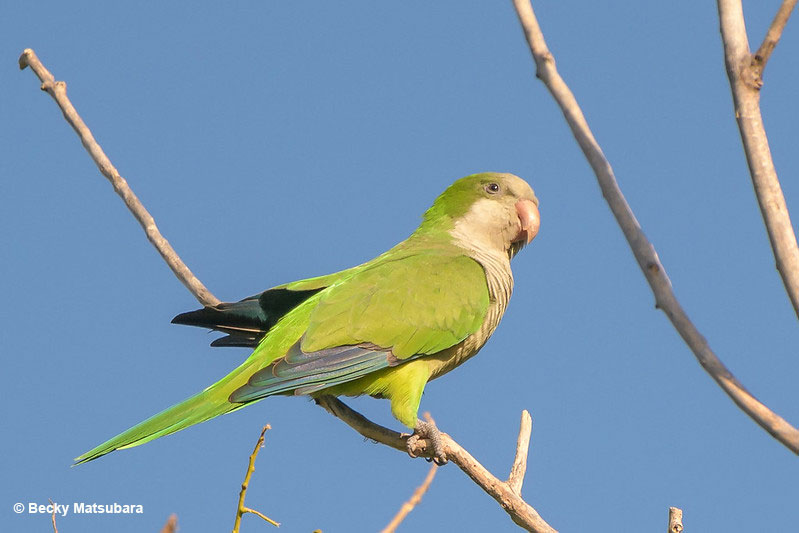
The birds themselves are mostly bright green with a gray face and chest, pale bill and long green tail.
Monk Parakeets are native to South America but introduced populations now live in parts of North America and Europe. They’re especially good at adapting to cities.
Their diet consists mainly of seeds, fruit, buds and flowers.
5. Red-lored Amazon
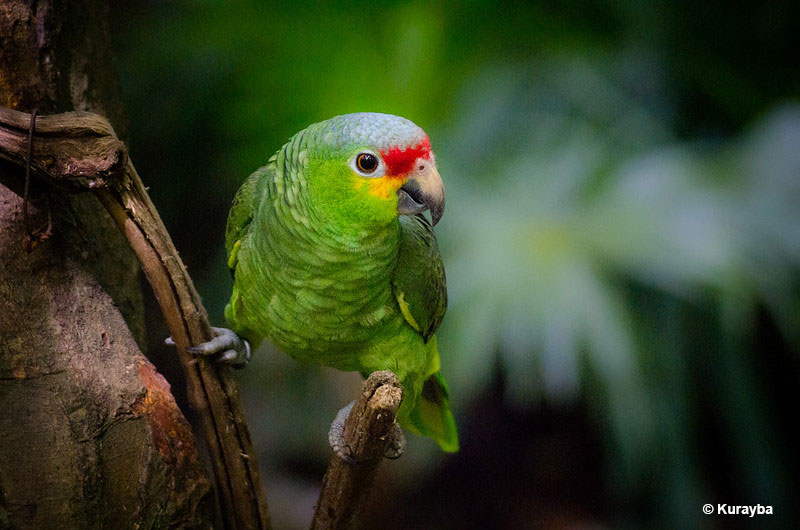
Scientific name: Amazona autumnalis
Length: 13–14 in (33–36 cm)
Wingspan: About 20–25 in (51–64 cm)
Weight: 11–17 oz (310–480 g)
Don’t let the name fool you. There’s much more green than red on a Red-lored Amazon.
Almost the entire body is green. The red is concentrated on the forehead while yellow and blue add smaller patches of color around the head.
These stocky parrots live from eastern Mexico through Central America and into northern South America. You can find them in tropical forests, forest edges, plantations and mangroves.
Red-lored Amazons are often seen in pairs or small groups during the day. At good feeding areas or night
6. Red-crowned Parrot
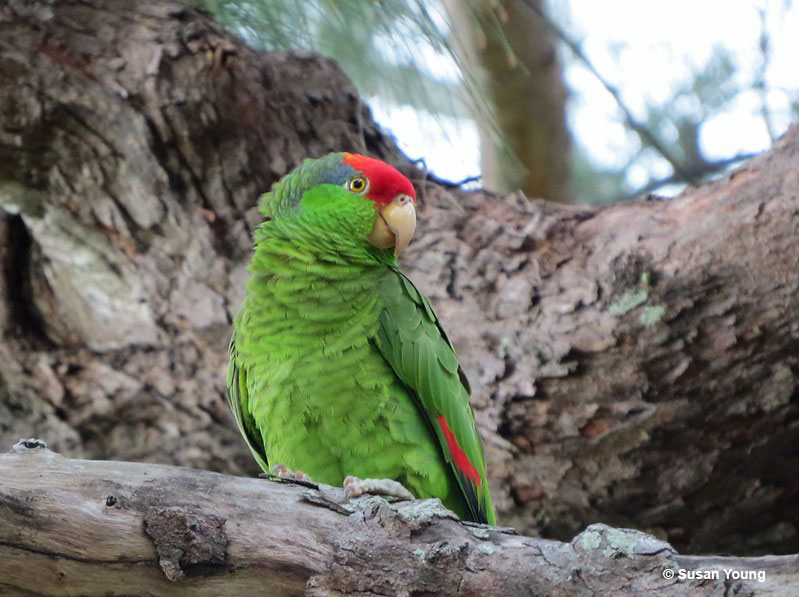
Scientific name: Amazona viridigenalis
Length: 12–13 in (30–33 cm)
Wingspan: About 20–23 in (51–58 cm)
Weight: 10–11 oz (280–310 g)
A flash of red on the head is often the first thing you notice, but almost everything else on a Red-crowned Parrot is green.
Adults have a bright red crown, green body and small patches of blue behind the eyes and on the wings. Males and females look similar.
The species is native to northeastern Mexico, but wild populations also live in several US cities. Southern Texas and parts of California are among the places where you might encounter noisy flocks.
Red-crowned Parrots eat seeds, fruit, nuts, flowers and buds. They usually feed in pairs or groups during the day before gathering at communal roosts in the evening.
7. Resplendent Quetzal
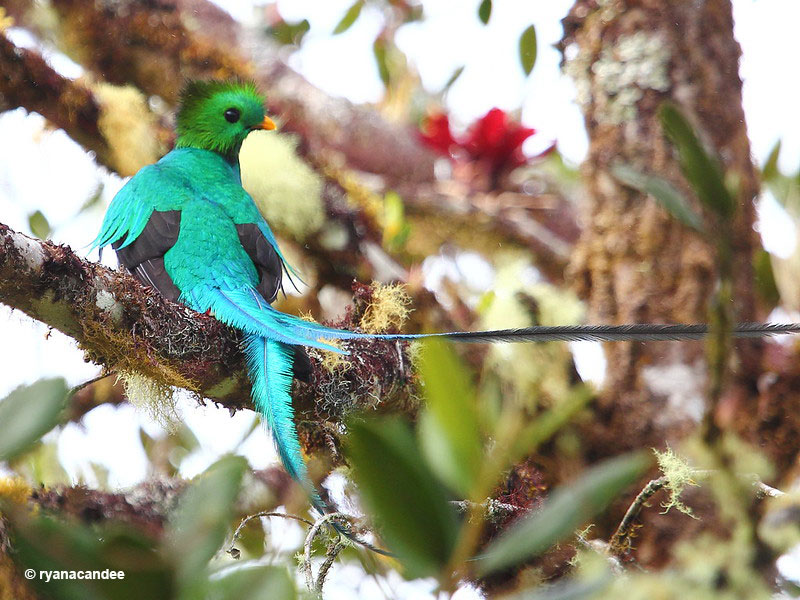
Scientific name: Pharomachrus mocinno
Length: 14–16 in (36–40 cm), excluding the male’s tail feathers
Weight: 6.3–7.4 oz (180–210 g)
Few green birds are as easy to remember as a male Resplendent Quetzal. Its shimmering green feathers are joined by an extraordinary train that can extend more than two feet beyond the body.
Males also have a bright red belly. Females are less colorful and lack the male’s extremely long tail feathers.
Resplendent Quetzals live in mountain forests from southern Mexico through Central America. They spend much of their time high in trees which can make them surprisingly difficult to spot despite their colors.
Fruit is an important part of their diet, especially wild avocados. They also catch insects, frogs and small lizards.
8. Green-breasted Mango
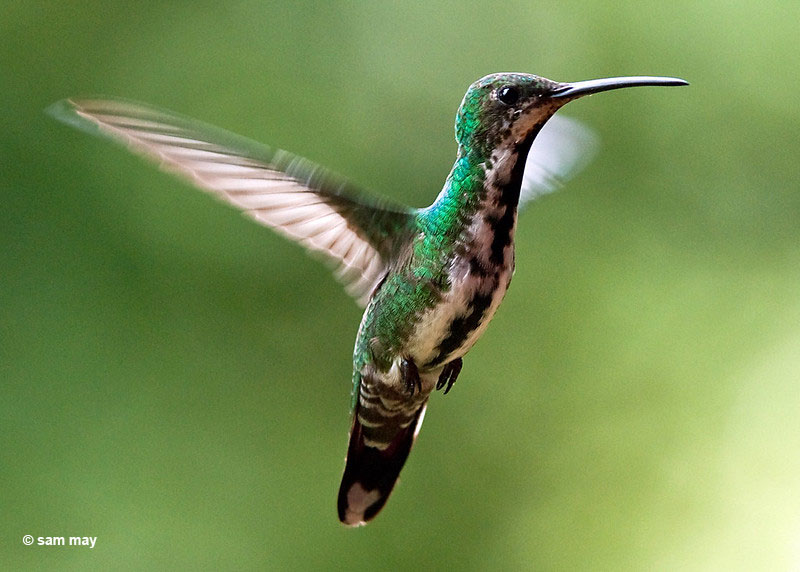
Scientific name: Anthracothorax prevostii
Length: 4.3–4.7 in (11–12 cm)
Weight: 0.2–0.3 oz (6–8 g)
At first glance, a Green-breasted Mango can look almost black. Then sunlight hits its feathers and the dark plumage suddenly shines metallic green.
This hummingbird has a slightly curved black bill and a long, streamlined body. Males have a dark stripe running down the center of the chest while females have a pale underside with a dark central stripe.
Green-breasted Mangos live from Mexico through Central America and into parts of South America. They occasionally wander north into southern Texas.
Like other hummingbirds, they drink nectar and catch small insects for protein. They often feed around flowering trees where their size and strong flight can make them easier to notice than smaller hummingbirds.
9. Rivoli’s Hummingbird
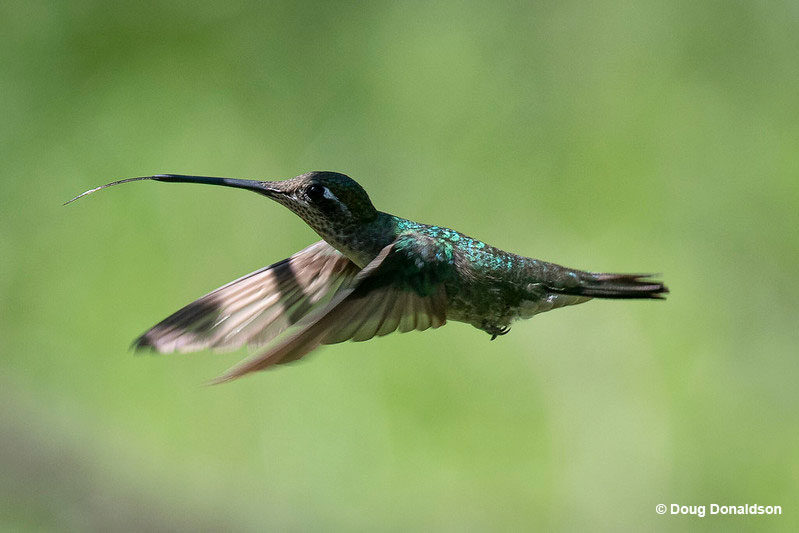
Scientific name: Eugenes fulgens
Length: 4.3–5.5 in (11–14 cm)
Weight: 0.2–0.3 oz (6–8 g)
Rivoli’s Hummingbird is a giant by hummingbird standards. Put one next to many familiar hummingbirds and the difference is immediately noticeable.
Adult males have a brilliant green throat, dark body and a crown that can flash purple in good light. Females are less colorful with green upperparts and grayish underparts.
The species occurs from the southwestern United States through Mexico and Central America. In the US, look for it in mountain forests and wooded canyons in Arizona and New Mexico.
Rivoli’s Hummingbirds visit flowers for nectar but also catch tiny insects. Their relatively large size allows them to defend good feeding spots against smaller hummingbirds.
10. White-eyed Vireo
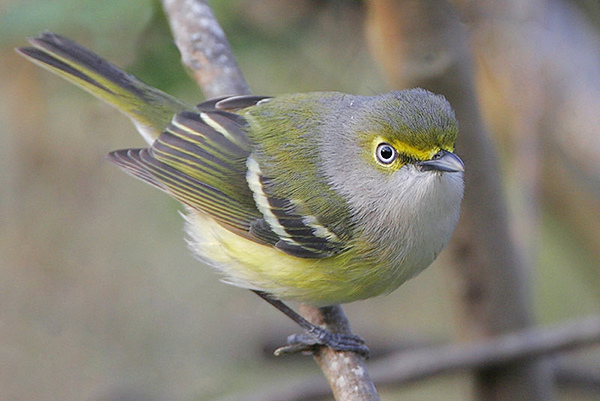
Scientific name: Vireo griseus
Length: 4.3–5.1 in (11–13 cm)
Wingspan: About 6.7 in (17 cm)
Weight: 0.3–0.5 oz (10–14 g)
The eye gives this little bird away. Adult White-eyed Vireos have striking pale white eyes surrounded by bright yellow markings that look almost like a pair of spectacles.
The rest of the bird is much less flashy. Its upperparts are olive-green while the underside is pale with yellow along the sides. Two light wing bars are also easy to see at close range.
White-eyed Vireos live mainly in the eastern and southeastern United States with populations extending through Mexico, the Caribbean and Central America.
They prefer dense shrubs and tangled vegetation. You may hear one singing from inside a thicket several times before getting a clear look at it.
Their diet consists mostly of insects, spiders and other small invertebrates with berries and fruit added at certain times of year.
11. Tennessee Warbler
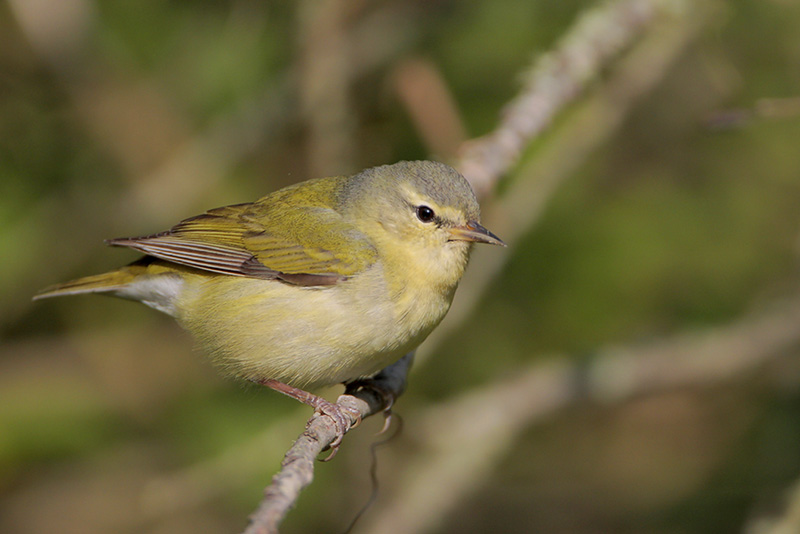
Scientific name: Leiothlypis peregrina
Length: 4.3–4.7 in (11–12 cm)
Wingspan: About 7.5–8.3 in (19–21 cm)
Weight: 0.3–0.4 oz (8–11 g)
Despite its name, the Tennessee Warbler doesn’t spend much time in Tennessee. The name came from birds encountered there during migration.
This small warbler has an olive-green back and pale underside. Breeding males have a gray head and white underparts while females and young birds are greener and can have a noticeable yellow wash.
Tennessee Warblers breed mainly in Canada’s boreal forests and migrate through much of eastern North America. They spend the winter in Central America and northern South America.
During the breeding season, they eat caterpillars and other insects. In winter, they also drink nectar and feed on fruit.
12. Orange-crowned Warbler
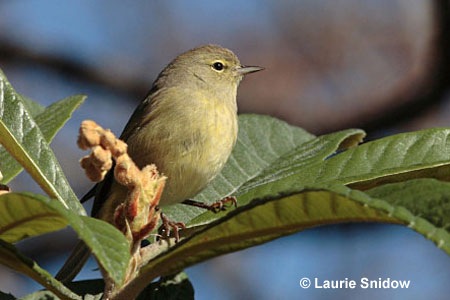
Scientific name: Leiothlypis celata
Length: 4.3–5.5 in (11–14 cm)
Wingspan: About 7.5 in (19 cm)
Weight: 0.3–0.4 oz (8–11 g)
You could watch an Orange-crowned Warbler for several minutes and never see anything orange.
The tiny orange crown patch that gives the species its name is usually hidden beneath other feathers. What you’ll normally see is a small olive-green bird with yellowish underparts, a thin pointed bill and a faint line through the eye.
Orange-crowned Warblers occur across much of North America. They breed mainly in Canada, Alaska and the western United States before many move south for winter.
Look for them low in shrubs where they actively search leaves and branches for insects. They also eat berries and nectar and may occasionally visit backyard feeders offering suet or sugar water.
13. Painted Bunting
Scientific name: Passerina ciris
Length: 4.7–5.5 in (12–14 cm)
Wingspan: About 8.3–9.1 in (21–23 cm)
Weight: 0.5–0.7 oz (13–19 g)
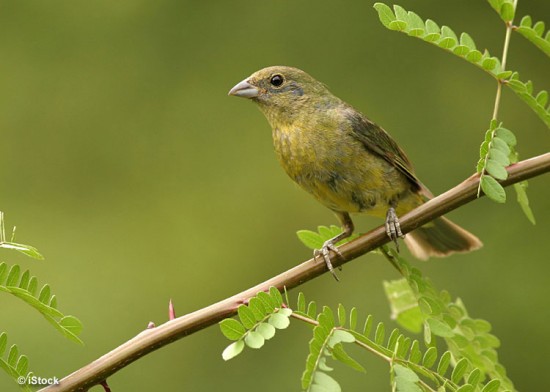
Male and female Painted Buntings look so different that you could easily mistake them for separate species.
The male is a mix of blue, red and green. Females are a much simpler color: bright yellow-green over most of the body. Young birds resemble females which means green Painted Buntings are actually quite common.
They breed in two main areas of the United States: the south-central states and along parts of the southeastern Atlantic coast. Most spend winter farther south in Mexico, Central America, the Caribbean and southern Florida.
Painted Buntings eat grass and weed seeds but switch to more insects during the breeding season. They also visit feeders stocked with small seeds.
14. Summer Tanager
Scientific name: Piranga rubra
Length: 6.7–7.5 in (17–19 cm)
Wingspan: About 11–12 in (28–30 cm)
Weight: 1.0–1.4 oz (28–40 g)
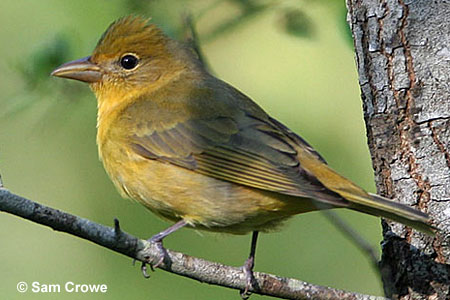
A male Summer Tanager is almost completely red. The female looks like a different bird altogether.
Females range from yellow to olive-green with darker green wings and back. Young males can be even more unusual, showing patches of red mixed with yellow-green as they change into adult plumage.
Summer Tanagers breed across much of the southern United States and parts of the Southwest. They migrate to Mexico, Central America and northern South America for winter.
One of their favorite foods has a sting. Summer Tanagers regularly catch bees and wasps, rubbing them against branches before swallowing them. They also eat other insects and fruit.
15. Green Heron
Scientific name: Butorides virescens
Length: 16–18 in (41–46 cm)
Wingspan: 25–27 in (64–69 cm)
Weight: 7–9 oz (200–255 g)
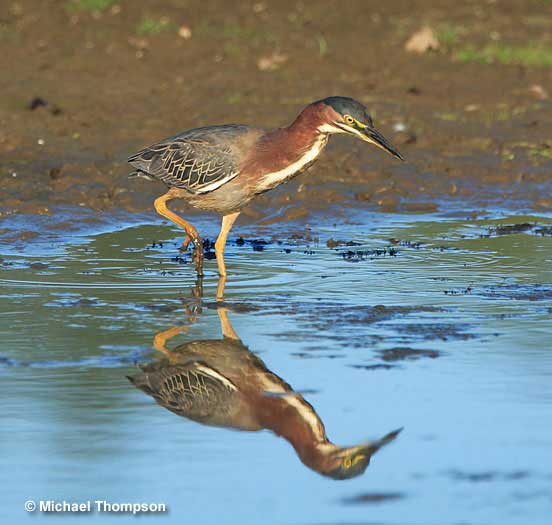
A Green Heron doesn’t always look very green. From a distance its back can appear almost black, but good light reveals a glossy green or blue-green sheen.
It’s a small, stocky heron with a chestnut-colored neck, dark cap and relatively short yellow legs. When resting, it often pulls its neck close to its body and looks much shorter than you might expect from a heron.
Green Herons live around ponds, marshes, streams and other shallow wetlands across much of North America.
They’re patient hunters with an unusual trick. Some have been seen dropping insects, feathers or other small objects onto the water as bait, then grabbing fish that come to investigate.
16. Emerald Toucanet
Scientific name: Aulacorhynchus prasinus
Length: 12–14 in (30–35 cm)
Weight: 4.2–8.1 oz (120–230 g)
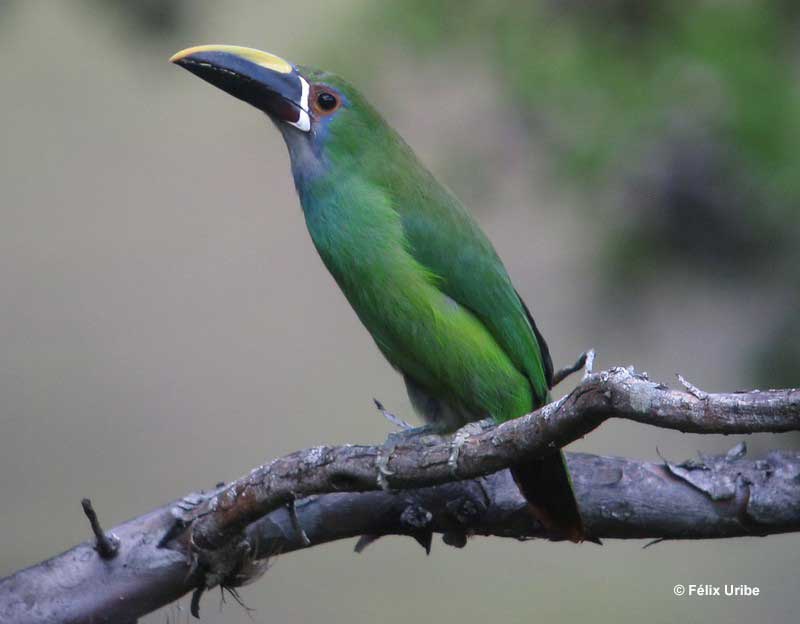
The Emerald Toucanet looks like someone shrunk a toucan and painted most of it green. It has the oversized bill you’d expect from a toucan, but its body is much smaller than that of the better-known large species.
Most of its plumage is emerald green with touches of blue around the face and reddish feathers under the tail. Its large bill can show yellow, black and other colors depending on the population.
Emerald Toucanets live in mountain forests from Mexico through Central America. They spend much of their time among trees where their green plumage provides excellent camouflage.
Fruit makes up most of their diet, but they also eat insects, lizards, eggs and occasionally nestling birds.
17. Orange-chinned Parakeet
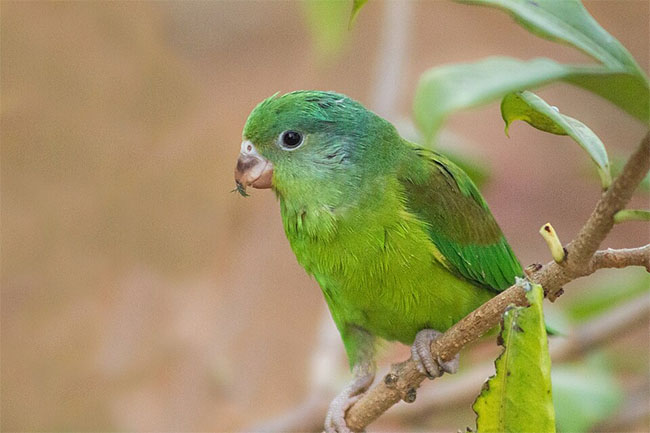
Scientific name: Brotogeris jugularis
Length: About 7–8 in (18–20 cm)
Weight: 1.9–2.5 oz (55–70 g)
You may need a close look to find the orange on an Orange-chinned Parakeet. The small patch beneath its bill is easily overlooked while the rest of the bird is overwhelmingly green.
These small parrots have short tails, pale bills and bright green bodies. Some blue can also be visible in the wings during flight.
Orange-chinned Parakeets range from southern Mexico through Central America to Colombia and Venezuela. They are comfortable around people and can be found in forest edges, farmland, gardens and towns.
They often travel in noisy flocks while searching for fruit, seeds, flowers and nectar. When feeding quietly among green leaves, however, an entire group can be surprisingly difficult to notice.
18. Green Honeycreeper
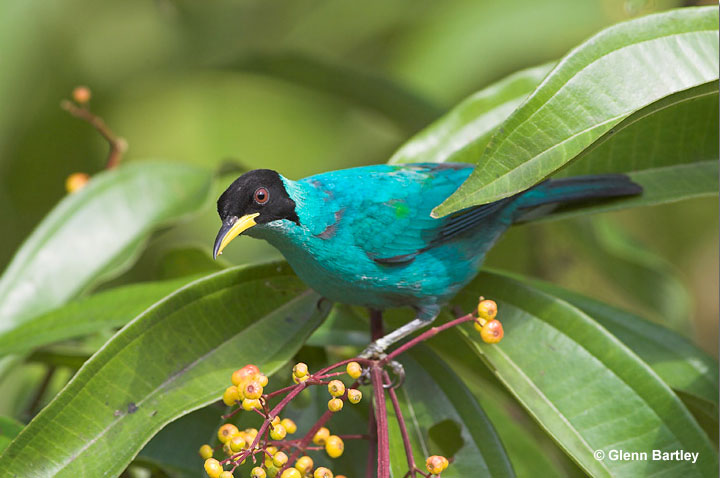
Scientific name: Chlorophanes spiza
Length: About 5–5.5 in (13–14 cm)
Weight: 0.5–0.7 oz (14–20 g)
With a name like Green Honeycreeper, you’d expect a green bird. That’s true for the female, but the male has a completely different look.
Females are bright grass-green with a paler throat and a slightly curved bill. Males are blue-green to turquoise with a black head and a bright yellow bill.
Green Honeycreepers live in tropical forests from southern Mexico through Central America and across much of northern South America.
They spend much of their time high in trees where they feed on fruit, nectar and insects. Their pointed bills help them reach into flowers, although fruit is an especially important part of their diet.
19. Green Kingfisher
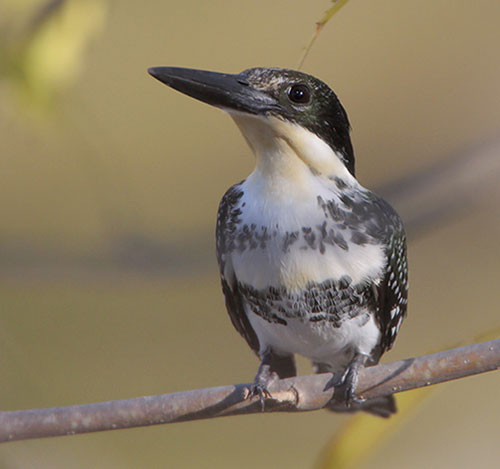
Scientific name: Chloroceryle americana
Length: 7.5–8.7 in (19–22 cm)
Weight: 1.0–1.4 oz (29–40 g)
The Green Kingfisher is small enough to surprise anyone used to seeing larger kingfishers. It’s only around the size of a large sparrow, but it hunts fish in much the same way as its bigger relatives.
Its head and upperparts are dark glossy green with white spots on the wings and tail. Males have a rusty chest band while females have green spots or bands across the chest.
Green Kingfishers occur from southern Texas through Mexico and Central America and across much of South America.
Look for them perched low beside streams, ponds and quiet rivers. They watch the water from a branch before diving headfirst after small fish and other aquatic prey.
20. European Green Woodpecker
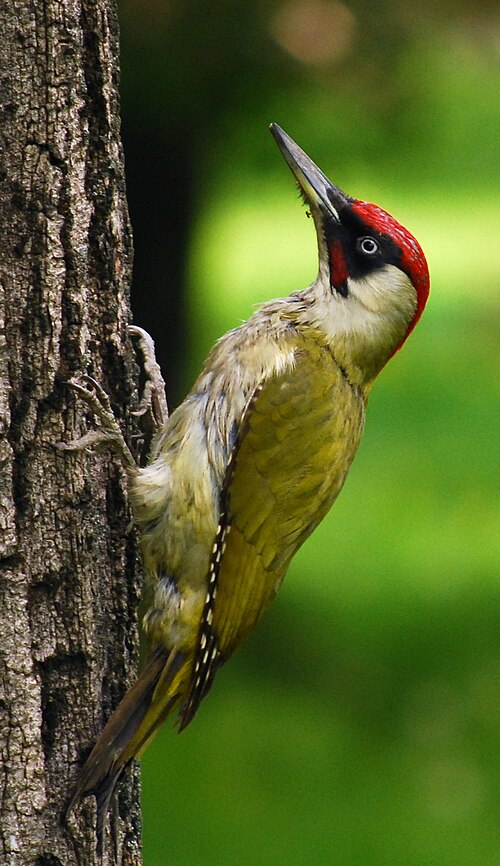
Scientific name: Picus viridis
Length: 12–14 in (30–36 cm)
Wingspan: 16–20 in (40–51 cm)
Weight: 5.3–7.8 oz (150–220 g)
If you see a green woodpecker hopping around on the ground in Europe, there’s a good chance it’s looking for ants.
The European Green Woodpecker has an olive-green back, yellow-green rump and pale greenish underparts. Its bright red crown provides a sharp contrast. Males also have red inside the black moustache stripe while females have an entirely black stripe.
Related: Woodpeckers in Massachusetts
The species is widespread across much of Europe and favors open woodland, parks, orchards and farmland with mature trees nearby.
Unlike many woodpeckers, it spends a lot of time feeding on the ground. Ants are its specialty and its long sticky tongue is perfectly suited to reaching deep inside ant nests.
21. Green Bee-eater
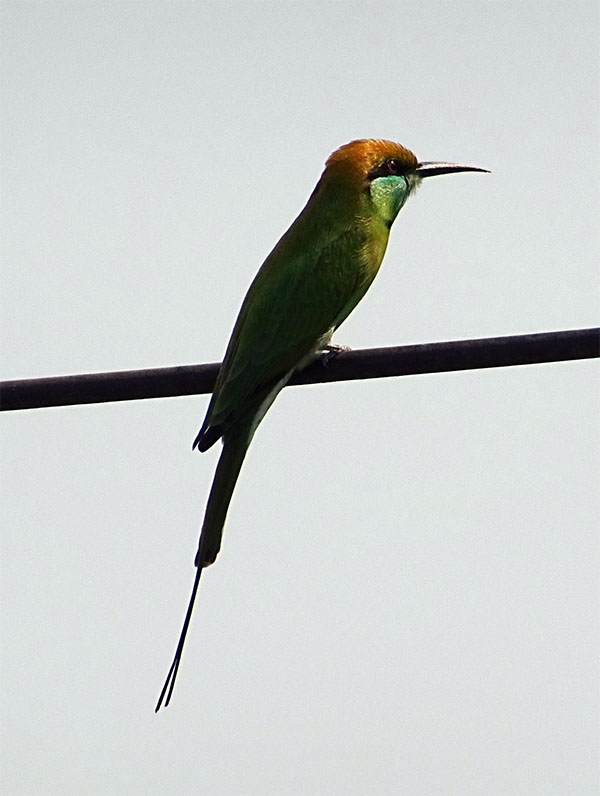
Scientific name: Merops orientalis
Length: 6.3–7.1 in (16–18 cm)
Weight: 0.5–0.7 oz (15–20 g)
A Green Bee-eater hunting from a branch is worth watching. It suddenly launches into the air, catches a flying insect and often returns to the same perch to eat it.
This small, slender bird is mostly bright green with a dark stripe through the eye and a thin black line around the throat. Blue can also appear on the face and throat. Two long central tail feathers give adults an even more distinctive shape.
Green Bee-eaters occur across parts of Africa, the Middle East and Asia. They favor open habitats where low branches, fences and wires provide good hunting perches.
Bees and wasps are common prey, but they also catch dragonflies, butterflies and other flying insects.
22. Green Broadbill
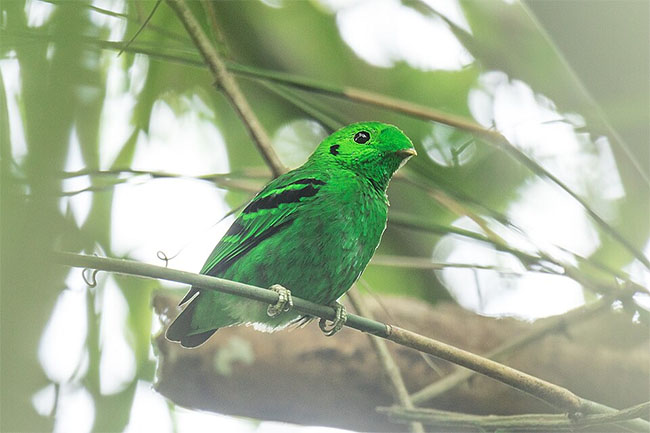
Scientific name: Calyptomena viridis
Length: 6.7–8.3 in (17–21 cm)
Weight: 1.7–2.3 oz (48–65 g)
The Green Broadbill can be almost invisible until it moves. Its bright leaf-green plumage blends remarkably well with the tropical forest canopy.
Males are especially green with darker markings on the wings and a small black patch near the ear. Females are duller with a less uniform green appearance. Both have a short, wide bill that can look partly hidden by the feathers around the face.
Green Broadbills live in the forests of Southeast Asia, including the Malay Peninsula, Sumatra and Borneo.
Fruit makes up much of their diet, particularly figs. They also eat insects and other small invertebrates.
23. Green Catbird
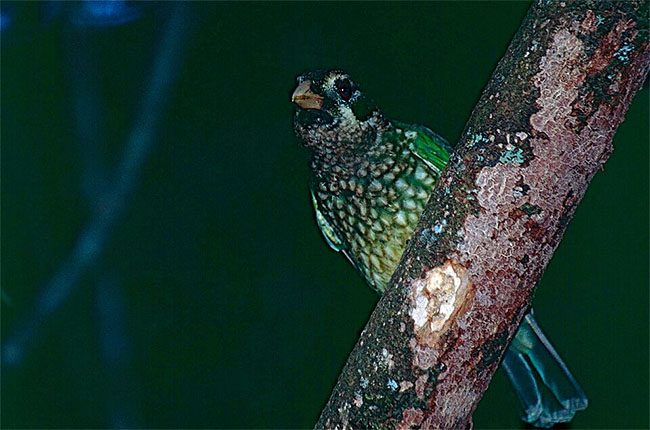
Scientific name: Ailuroedus crassirostris
Length: 9.4–12.2 in (24–31 cm)
Weight: 3.5–7.1 oz (100–200 g)
You might hear a Green Catbird before you ever find it. Its strange call can sound surprisingly like a cat meowing somewhere among the trees.
The bird itself is mostly green with a darker olive-green back, pale spots on the chest and a reddish-brown eye. Its colors make it easy to lose among leaves even though it’s considerably larger than many forest songbirds.
Green Catbirds are native to eastern Australia where they live mainly in subtropical and temperate rainforests and other dense woodland.
They eat plenty of fruit but also take flowers, seeds and small animals. Unlike some other bowerbirds, male Green Catbirds don’t build elaborate bowers to attract females.
24. Green Imperial Pigeon
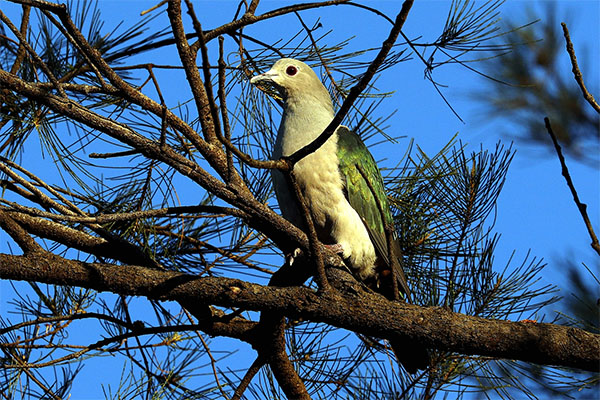
Scientific name: Ducula aenea
Length: 15.7–18.5 in (40–47 cm)
Weight: 12.8–22.9 oz (365–650 g)
Pigeons aren’t always gray city birds. The Green Imperial Pigeon is a large forest pigeon with glossy green wings and a back that can shine bronze in good light.
Its head and underparts are much paler, usually gray to pinkish-gray. The combination of a chunky body, pale head and metallic green upperparts makes it fairly easy to recognize.
Green Imperial Pigeons occur across a large part of South and Southeast Asia. They live in forests, mangroves and wooded areas and are often seen high in fruiting trees.
Fruit is their main food. They swallow many fruits whole and can help spread seeds through the forest as they move between feeding areas.
25. Eclectus Parrot
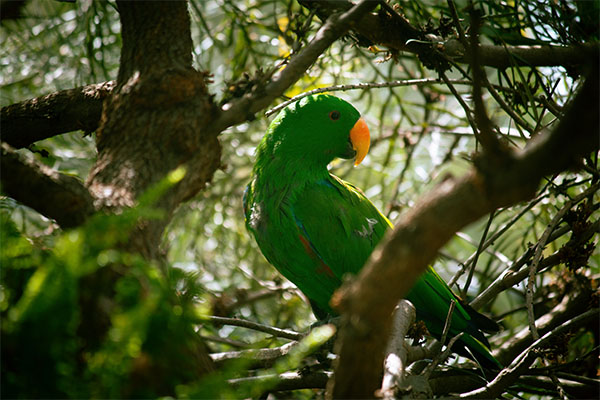
Scientific name: Eclectus roratus
Length: 14–17 in (35–43 cm)
Weight: 13–21 oz (375–600 g)
Put a male and female Eclectus Parrot side by side and you might wonder how they could possibly be the same species.
The male is brilliant green with an orange-yellow bill and patches of red and blue under the wings. The female looks completely different with mostly red and blue-purple plumage and a black bill.
Eclectus Parrots are native to parts of Indonesia and nearby islands. They live mainly in tropical forests and spend much of their time high in the trees.
Their diet includes fruit, seeds, nuts, flowers and buds. They nest in deep tree cavities and females may remain around a suitable nest site for long periods while males bring them food.
The dramatic difference between the sexes once caused enough confusion that early naturalists described males and females as separate species.
Final Thoughts
Green can make a bird stand out in the open and almost disappear the moment it lands among leaves.
Some of the birds on this list, such as the Green Parakeet and male Eclectus Parrot, are green from almost head to tail. Others mix green with red, blue, yellow or gray.
You don’t always need to travel to a tropical rainforest to find one either. Depending on where you live, a green bird could be hiding in a backyard tree, feeding in a city park or flying overhead in a noisy flock.
Next time you spot a flash of green among the leaves, take a closer look. It might not be a leaf moving after all.
Related Posts
Are Crows A Bad Omen? Symbolism & Meaning Explained
Crows are common birds all across the United States and…